
Establishing a content research practice to help simplify Cisco licensing
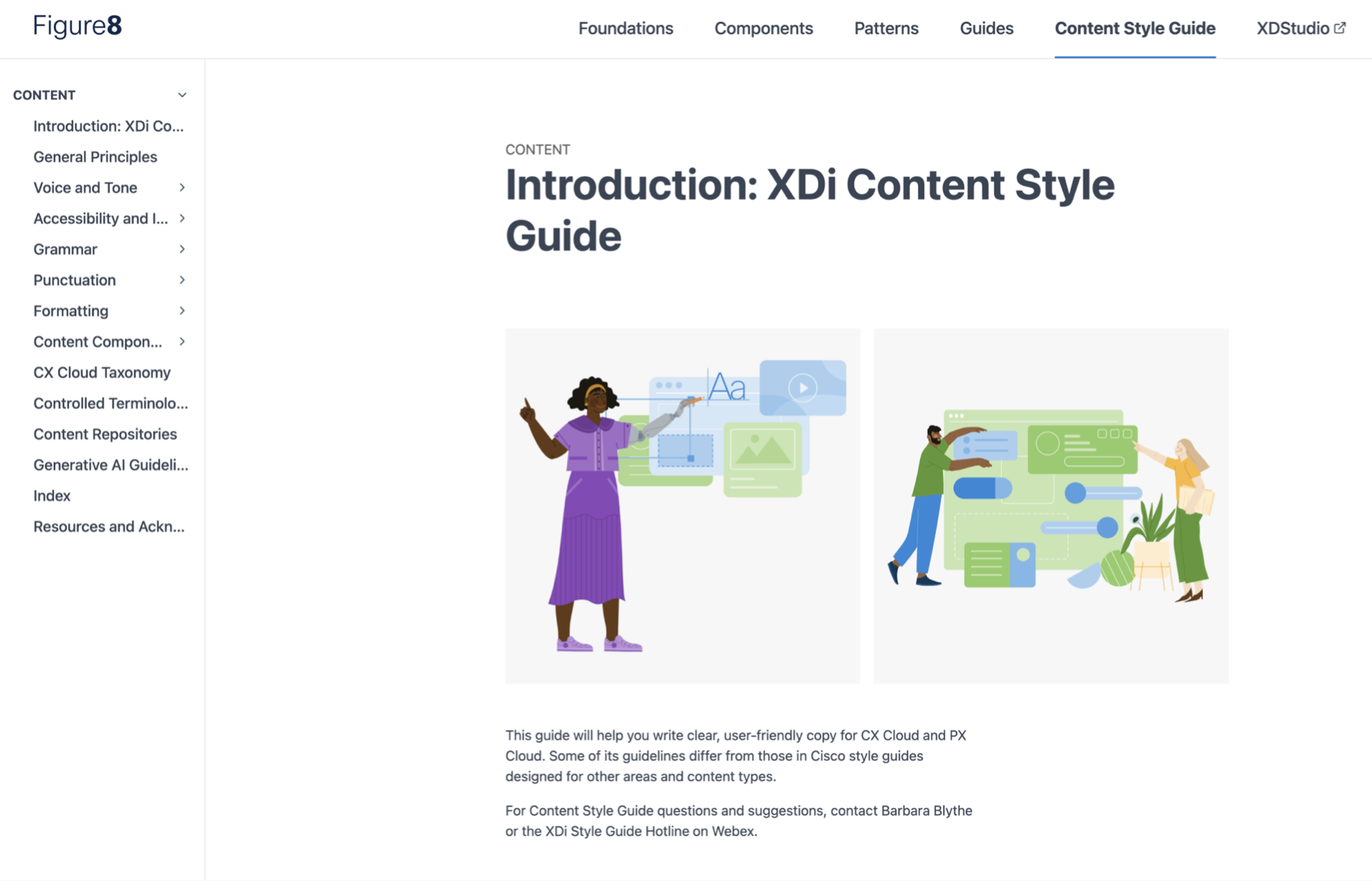
Confusing and inconsistent terminology was a top customer and partner pain point in Cisco licensing applications when I joined the Licensing Simplification project. I advocated for and helped created a content research practice for Cisco’s licensing applications that allowed us to make quick, data-driven terminology and taxonomy decisions, enabled a customer-centric approach to licensing, and helped increase Cisco’s licensing NPS score by 10 points.
The context and the problem
I was content lead on a project to build a new all-inclusive licensing portal that was intended to simplify the Cisco licensing experience by providing one place to manage licenses (rather than the current mishmash of 7 portals, each offering different actions) and offering a clear, simple, user-friendly interface. The previous portals had had very little input from product designers and no content designers had ever worked on them. For more on my role more generally in building the new portal, see [link].
Ensuring that the terminology used in the new portal is clear, accurate, and familiar to users was both a high priority communicated by leadership and something that was clearly important from looking at the old portals and user feedback on them. This was particularly important due to the highly technical nature of many of the actions described in the portal and the complexity of the associated vocabulary.
Improving the clarity and consistency of the terminology proved easier said than done though. It was easy to identify terms that might not be clear enough, or that were used inconsistently, but aligning with stakeholders on which term to use going forward was difficult and time-consuming. Part of the challenge was that in some cases different terms were used in the different licensing portals we were absorbing, and different SMEs and directors argued aggressively for different choices based largely on which portals their team had built. In some cases one term was used consistently throughout, but it was potentially confusing, and SMEs often argued for keeping it anyway. Attempts to create systems for gaining alignment were not terribly successful due to territorial disputes, and there was very little in the way of relevant research studies to draw on.
As a result, even though we were putting a lot of effort into trying to make the terminology as clear, consistent, and familiar to our users as possible, we still weren’t hitting all of our heuristic targets. We were also wasting a lot of time with unproductive terminology discussions. I realized that we needed targeted content research and a data-based approach to change hearts and minds.
Working toward a solution
I started by approaching my team’s new UX researchers to ask whether they had capacity for content-focused research, in addition to the usability testing they were already doing. They hadn’t done content-specific research before, but one of our researchers had some capacity and agreed to devote some time to collaborating on terminology research.
We discussed Erica Jorgensen’s concept of “MIC” (most important content), and how we can’t test all the terms in the application, so we’d need to focus on a select list of terms that fall into at least two of these categories: appear frequently, complexity/ambiguity, part of MIC. We also knew that we’d want to work iteratively. As in, create the best test design we could with some reasonable planning, then execute, see what results we get, and adapt as needed for the next study.
I shared my experiences with content research from a previous project and suggested some methodologies and approaches that had produced valuable data (as well as some that hadn’t). For example, I’ve found that Cloze (fill in the blank) tests often provide great data and help resolve stakeholder disagreements. Card sorting and click testing can also be useful.
We agreed that different types of terms would likely lend themselves best to different methodologies. We also decided to start with a terminology-focused study to test some key terms and then ideally transition to working terminology research into relevant usability tests, so the terms would be tested with more context.
Ultimately I needed a way to change hearts and minds, so the team could make faster and better content decisions. The researcher said that she would present readouts of the results to stakeholders and collaborate with the product teams on creating and tracking Jira tickets to demonstrate that the content research was leading to measurable improvements. I also decided to add green checkmarks to terms in my Controlled Terminology List that have been validated and add a column to give a short recap of relevant research and a link to the study.
Process and execution
First subsection title goes here
Lorem ipsum dolor sit amet, consectetur adipiscing elit. Vestibulum pellentesque, nulla eu varius porta, arcu nisl convallis turpis, ac ullamcorper neque ante eget lacus. Duis tellus nisi, efficitur vel dictum a, tincidunt et mauris. Etiam ut turpis in elit congue tristique. Nunc ullamcorper diam nec ipsum consequat feugiat nec cursus nisi. Quisque eu fermentum velit. Aliquam vel congue purus. Nulla facilisi. Suspendisse velit orci, venenatis laoreet venenatis sit amet, dapibus vitae arcu. Nunc vitae pellentesque enim. Integer hendrerit augue et nisi interdum, in interdum lorem euismod. Vivamus gravida laoreet urna eu convallis. Praesent eget tempor sapien. Cras euismod id metus ac blandit. Sed at rhoncus metus. Nulla ut nunc est.
Second subsection title
Lorem ipsum dolor sit amet, consectetur adipiscing elit. Vestibulum pellentesque, nulla eu varius porta, arcu nisl convallis turpis, ac ullamcorper neque ante eget lacus. Duis tellus nisi, efficitur vel dictum a, tincidunt et mauris. Etiam ut turpis in elit congue tristique. Nunc ullamcorper diam nec ipsum consequat feugiat nec cursus nisi. Quisque eu fermentum velit. Aliquam vel congue purus. Nulla facilisi. Suspendisse velit orci, venenatis laoreet venenatis sit amet, dapibus vitae arcu. Nunc vitae pellentesque enim. Integer hendrerit augue et nisi interdum, in interdum lorem euismod. Vivamus gravida laoreet urna eu convallis. Praesent eget tempor sapien. Cras euismod id metus ac blandit. Sed at rhoncus metus. Nulla ut nunc est.
Results and impact
Lorem ipsum dolor sit amet, consectetur adipiscing elit. Vestibulum pellentesque, nulla eu varius porta, arcu nisl convallis turpis, ac ullamcorper neque ante eget lacus. Duis tellus nisi, efficitur vel dictum a, tincidunt et mauris. Etiam ut turpis in elit congue tristique. Nunc ullamcorper diam nec ipsum consequat feugiat nec cursus nisi. Quisque eu fermentum velit. Aliquam vel congue purus. Nulla facilisi. Suspendisse velit orci, venenatis laoreet venenatis sit amet, dapibus vitae arcu. Nunc vitae pellentesque enim. Integer hendrerit augue et nisi interdum, in interdum lorem euismod. Vivamus gravida laoreet urna eu convallis. Praesent eget tempor sapien. Cras euismod id metus ac blandit. Sed at rhoncus metus. Nulla ut nunc est.
Reflections and lessons learned
Lorem ipsum dolor sit amet, consectetur adipiscing elit.
Vestibulum pellentesque, nulla eu varius porta, arcu nisl convallis turpis, ac ullamcorper neque ante eget lacus. Duis tellus nisi, efficitur vel dictum a, tincidunt et mauris. Etiam ut turpis in elit congue tristique. Nunc ullamcorper diam nec ipsum consequat feugiat nec cursus nisi. Quisque eu fermentum velit. Aliquam vel congue purus.
Lorem ipsum dolor sit amet, consectetur adipiscing elit.
Vestibulum pellentesque, nulla eu varius porta, arcu nisl convallis turpis, ac ullamcorper neque ante eget lacus. Duis tellus nisi, efficitur vel dictum a, tincidunt et mauris. Etiam ut turpis in elit congue tristique. Nunc ullamcorper diam nec ipsum consequat feugiat nec cursus nisi. Quisque eu fermentum velit. Aliquam vel congue purus.
Lorem ipsum dolor sit amet, consectetur adipiscing elit.
Vestibulum pellentesque, nulla eu varius porta, arcu nisl convallis turpis, ac ullamcorper neque ante eget lacus. Duis tellus nisi, efficitur vel dictum a, tincidunt et mauris. Etiam ut turpis in elit congue tristique. Nunc ullamcorper diam nec ipsum consequat feugiat nec cursus nisi. Quisque eu fermentum velit. Aliquam vel congue purus.